Omdia - Experts & Thought Leaders











Latest Omdia news & announcements
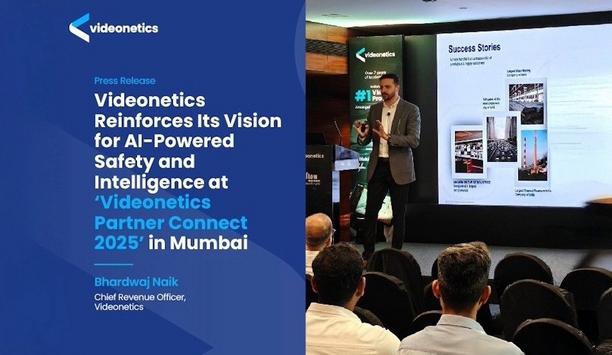
Videonetics, the pioneer in True AI-powered video analytics and unified video computing platforms, reaffirmed its commitment to shaping the future of intelligent video technologies at Videonetics Partner Connect 2025, held on December 5 in Mumbai. The gathering brought together partners, system integrators, and customers across the government and enterprise landscape, serving as a strategic platform for deepening collaboration and accelerating the adoption of AI-driven video intelligence across India. Raw video data into meaningful insights As a company built on 17+ years of R&D, 20+ patented technologies, and deployments across more than 150 cities and critical infrastructure sectors worldwide, Videonetics used the forum to outline its continued mission: transforming raw video data into meaningful insights that enhance safety, improve operational efficiency, and empower organizations to make smarter decisions. With its unified video computing platform at the core, Videonetics reiterated its commitment to developing scalable, indigenous, and globally benchmarked solutions engineered for real-world environments. Importance of video data Addressing the audience, Bhardwaj Naik, Senior Vice President & Chief Revenue Officer at Videonetics, said, “Our partners are critical to the transformation we are driving across sectors. As the volume, complexity, and importance of video data continue to grow, Videonetics remains steadfast in its commitment to deliver trusted, scalable, and future-ready AI solutions." "Videonetics Partner Connect 2025 is a reaffirmation of our long-term vision, to combine deep technology innovation with strong partnerships, ensuring that organizations can unlock the full value of video intelligence across every environment.” Videonetics’ focus on strengthening The platform also emphasized Videonetics’ focus on strengthening its partner ecosystem, which is instrumental in delivering the company’s mission at scale. Through dialogues led by the leadership team, attendees explored how Videonetics’ innovations in True AI, video management, analytics, traffic intelligence, and cloud-based video services are addressing growing national and industry needs from urban safety and governance to enterprise security and operational intelligence. AI-powered innovation Naresh B. Wadhwa, Vice-Chairman & Managing Director of Videonetics, said, “Videonetics remains deeply committed to advancing India’s leadership in AI-powered innovation. Our goal is not just to build world-class technology but to create meaningful impact enabling safer cities, smarter enterprises, and more resilient infrastructure." "Videonetics Partner Connect 2025 reflects our belief that collaboration is central to shaping this future. Together with our partners, we are driving a new era of video intelligence built in India for the world.” Advancing breakthrough innovations in AI With its foundational philosophy of “looking deeper to simplify the world,” Videonetics continues to lead India’s evolution toward safer, smarter, and more connected environments. Recognized by OMDIA for seven consecutive years as India’s No. 1 Video Management System provider and among the top 10 in Asia, the company remains focused on advancing breakthrough innovations in AI, strengthening its partner ecosystem, and expanding its impact across global markets.

Videonetics, a pioneer in AI-powered video computing, has once again been recognized by OMDIA (Informa TechTarget 2025) as India’s only #1 Video Management System (VMS) provider, and ranked among the Top 10 in APAC (excl. China) in Video Management and Video Analytics. This recognition, sustained for over seven consecutive years, underscores Videonetics’ unwavering pioneership, innovation, and excellence in delivering intelligent, secure, and scalable video solutions. “Being recognized by OMDIA for seven consecutive years is a proud validation of our vision — Made in India, Built for the world,” said Naresh B. Wadhwa, Vice-Chairman & MD, Videonetics. “Our focus on AI-driven innovation and trusted interoperability continues to empower governments, enterprises, and cities to build safer and smarter societies.” Rapid expansion Building on its dominance in India, Videonetics is rapidly expanding across Southeast Asia and the Middle East, emerging as one of Asia’s fastest-growing video computing companies. Its solutions empower smart cities, airports, transportation networks, and critical infrastructure, redefining how organizations monitor, analyze, and act on video intelligence in real time. Driven by a strong R&D foundation & its patented technologies in AI, computer vision, and deep learning, Videonetics continues to push the boundaries of innovation through its flagship Video Management System (VMS) and Video Analytics (VA) platforms — designed for interoperability, scalability, and high performance in complex environments. Trust, collaboration, and purpose “Our journey reflects more than market success — it’s about trust, collaboration, and purpose,” said Bhardwaj Naik, Chief Revenue Officer, Videonetics. “We remain committed to working with authorities and enterprises worldwide to enhance safety, security, and operational efficiency through the power of True AI.” With Thousands of cameras connected across smart cities, highways, enterprises, and industrial plants, Videonetics’ solutions adhere to the highest global standards of cybersecurity, interoperability, and data integrity. The company is certified under ISO 9001:2015, ISO 27001:2013, STQC, and is ONVIF-compliant (Profiles S, G, T, and M) ensuring reliability and trust at every layer.

WatchGuard Technologies, a global pioneer in unified cybersecurity for managed service, announced a major expansion of its WatchGuard Cloud PSA (Professional Services Automation), now offering deep, native support for ConnectWise Manage, Autotask PSA, and HaloPSA. This broad integration ‒ which includes the entire portfolio of Network, Identity, Endpoint, and MDR services ‒ solidifies WatchGuard's continued commitment to empowering MSPs by embedding security management directly into the core systems they rely on to operate and grow their businesses. This broad integration ‒ which includes the entire portfolio of Network, Identity, Endpoint, and MDR services ‒ solidifies WatchGuard's continued commitment to empowering MSPs by embedding security management directly into the core systems they rely on to operate and grow their businesses. Efficiency across security operations With this expansion, WatchGuard creates efficiency across security operations and scales to each partner’s business model with a flexible fit. As the newest addition to its Unified Security Platform, these advancements deliver seamless integration and eliminate the need for spreadsheets, manual reconciliation, or disconnected workflows via: Native integrations with ConnectWise Manage, Autotask PSA, and HaloPSA WatchGuard Agent deployments through ConnectWise RMM Automated workflows for asset synchronization, billing, ticketing, and contract management Unified operations that eliminate manual processes, boost SLA compliance, and increase profitability ConnectWise environment “Many cybersecurity platforms lack deep PSA integration, forcing MSPs to juggle alerts, tickets, and billing outside their core operational systems, creating inefficiencies, increasing risk, and impacting revenue,” said Chris Miller, vice president, Pacific Office Automation. “Directly from my ConnectWise environment, my team can now instantly view customers and product licenses, while alerts automatically generate and resolve tickets. Role-based access and multi-tenant visibility streamline account transitions and strengthen compliance.” “It’s a major leap in operational efficiency that empowers my technicians to focus on what matters most ‒ delivering outstanding customer service.” WatchGuard Agent Managed service providers have made it abundantly clear that managing multiple agents is no longer acceptable. WatchGuard is the first to answer the call with WatchGuard Agent, a single, modular agent for FireCloud client, endpoint security products and add-ons (including patch management and encryption), NDR collectors, and cross-platform support for Windows, macOS, Linux, Android, and iOS. Partners that qualify can join the beta now. AuthPoint MFA integration and Open MDR support will follow in early 2026, further extending the unified experience. Managed through WatchGuard Cloud, the WatchGuard Agent accelerates onboarding, reduces maintenance overhead, and simplifies upgrades. Additionally, MSPs can now easily monitor the health of their clients’ security posture, ensuring every component is properly installed, updated, and operating as intended. True single-agent solution By leading the market toward a true single-agent solution, WatchGuard is enabling MSPs with one platform, one agent, and the ultimate goal of total security. “With full integration across our Unified Security Platform, including Firebox, FireCloud, AuthPoint, Endpoint Security, and ThreatSync, we’re delivering unified detection and response, automated workflows, integrated MDR capabilities, and actionable insights that empower our partners and customers with true 24/7 threat protection,” said Ben Oster, vice president, product management operations at WatchGuard. “Regardless of PSA choice, WatchGuard MSPs now achieve full-spectrum automation from alert to invoice.” Recognized by industry analysts WatchGuard is recognized as a Champion in the 2025 Canalys Cybersecurity Matrix, underscoring its commitment to innovation and partner success. “RMM and PSA continue to be the core of the MSP operating stack,” said Jessica Davis, principal analyst at Omdia. “As the threat landscape has evolved, cybersecurity is becoming a third component of that core stack. MSPs expanding their service portfolios need deep integrations between their security platforms and their PSA/RMM platforms to drive efficiency and profitability. These integrations need to provide simplified management, automated workflows, and a unified platform that scales with customer needs.”
Insights & Opinions from thought leaders at Omdia
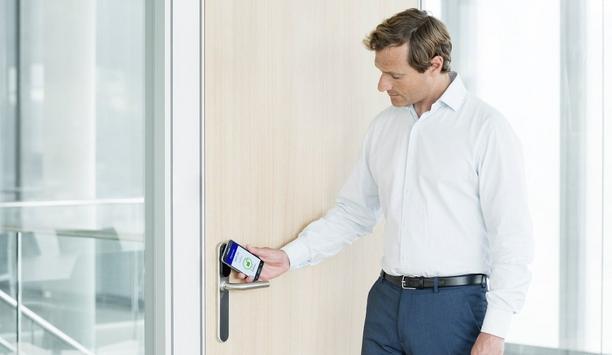
The 2020s will be a wireless decade in access control, says Russell Wagstaff from ASSA ABLOY Opening Solutions EMEA. He examines the trends data, and looks beyond mobile keys to brand new security roles for the smartphone. The benefits of wire-free electronic access control are well rehearsed. They are also more relevant than ever. A wireless solution gives facility managers deeper, more flexible control over who should have access, where and when, because installing, operating and integrating them is easier and less expensive than wiring more doors. Battery powered locks Many procurement teams are now aware of these cost advantages, but perhaps not their scale. Research for an ASSA ABLOY Opening Solutions (AAOS) benchmarking exercise found installation stage to be the largest contributor to cost reduction. Comparing a typical installation of battery-powered Aperio locks versus wired locks at the same scale, the research projected an 80% saving in installers’ labor costs for customers who go cable-free. Battery powered locks all consume much less energy than traditional wired locks Operating costs are also lower for wireless: Battery powered locks all consume much less energy than traditional wired locks, which normally work via magnets connected permanently to electricity. Wireless locks only ‘wake up’ when presented with a credential for which they must make an access decision. AAOS estimated a 70% saving in energy use over a comparable lock’s lifetime. Find out more about wireless access control at ASSA ABLOY's upcoming June webinar Deploying wireless locks In short, every time a business chooses a wireless lock rather than a wired door, they benefit from both installation and operating cost savings. A recent report from IFSEC Global, AAOS and Omdia reveals the extent to which the advantages of wireless are cutting through. Responses to a large survey of security professionals — end-users, installers, integrators and consultants serving large corporations and small- to medium-sized organizations in education, healthcare, industrial, commercial, infrastructure, retail, banking and other sectors — suggest almost four locations in ten (38%) have now deployed wireless locks as a part or the whole of their access solution. The corresponding data point from AAOS’s 2014 Report was 23%. Electronic access control Electronic access control is less dependent than ever on cabling Without doubt, electronic access control is less dependent than ever on cabling: Even after a year when many investments have been deferred or curtailed, the data reveals fast-growing adoption of wireless locks, technologies and systems. Is mobile access control — based on digital credentials or ‘virtual keys’ stored on a smartphone — an ideal security technology for this wire-free future? In fact, the same report finds mobile access is growing fast right now. Among those surveyed, 26% of end-users already offer mobile compatibility; 39% plan to roll out mobile access within two years. Before the mid-2020s, around two-thirds of access systems will employ the smartphone in some way. The smartphone is also convenient for gathering system insights Driving rapid adoption What is driving such rapid adoption? The convenience benefits for everyday users are obvious — witness the mobile boom in banking and payments, travel or event ticketing, transport, food delivery and countless more areas of modern life. Access control is a natural fit. If you have your phone, you are already carrying your keys: What could be easier? IBM forecasts that 1.87 billion people globally will be mobile workers by 2022 Less often discussed are the ways mobile management makes life easier for facility and security managers, too. Among those polled for the new Wireless Access Control Report, almost half (47%) agreed that ‘Mobile was more flexible than physical credentials, and 36% believe that mobile credentials make it easier to upgrade employee access rights at any time.’ IBM forecasts that 1.87 billion people globally will be mobile workers by 2022. Workers in every impacted sector require solutions which can get the job done from anywhere: Access management via smartphone offers this. Site management device The smartphone is also convenient for gathering system insights. For example, one new reporting and analytics tool for CLIQ key-based access control systems uses an app to collect, visualise and evaluate access data. Security system data could contribute to business success. The app’s clear, visual layout helps managers to instantly spot relevant trends, anomalies or patterns. It’s simple to export, to share insights across the business. Reinvented for learning — not just as a ‘key’ or site management device — the phone will help businesses make smarter, data-informed decisions. The smartphone will also play a major role in security — and everything else — for an exciting new generation of smart buildings. These buildings will derive their intelligence from interoperability. Over 90% of the report’s survey respondents highlighted the importance of integration across building functions including access control, CCTV, alarm and visitor management systems. Genuinely seamless integration They offer greater peace of mind than proprietary solutions which ‘lock you in’ for the long term Yet in practise, stumbling blocks remain on the road to deeper, genuinely seamless integration. More than a quarter of those polled felt held back by a lack of solutions developed to open standards. ‘Open standards are key for the momentum behind the shift towards system integration,’ notes the Report. As well as being more flexible, open solutions are better futureproofed. Shared standards ensure investments can be made today with confidence that hardware and firmware may be built on seamlessly in the future. They offer greater peace of mind than proprietary solutions which ‘lock you in’ for the long term. Open solutions and mobile management are critical to achieving the goals which end-users in every vertical are chasing: scalability, flexibility, sustainability, cost-efficiency and convenience.