Hanwha Vision Europe - Experts & Thought Leaders





























Latest Hanwha Vision Europe (formerly Hanwha Techwin Europe) news & announcements
In recent years, the development and adoption of AI technology has accelerated at an unprecedented pace, impacting various industries. Of course, the spark of innovation provided by AI is already a feature of the video surveillance sector. However, Hanwha Vision predicts that 2026 will be a pivotal turning point for AI. They foresee AI moving beyond simple adoption to becoming the essential foundation of the entire industry - the emergence of so-called ‘Autonomous AI Agents’ will reshape the structure and operations of video surveillance systems. To meet this wave of change, Hanwha Vision has identified five key trends that the industry must focus on. These trends signal a future where AI serves as the core engine, elevating video surveillance further from monitoring to providing central pillars of operational efficiency and sustainability. Trustworthy AI: Data quality and responsible use As AI analysis becomes ubiquitous, the principle of “Garbage In, Garbage Out” will be critical in video surveillance. Visual noise and distortion caused by challenging environments - such as low light, backlighting, or fog - are primary causes of AI-derived false alarms. In 2026, establishing a ‘Trusted Data Environment’ to solve these issues will become the industry’s top priority. With the performance of AI analysis engines leveling up across the board, the focus of investment is shifting toward securing high-quality video data that AI can interpret without error. AI-based high-performance ISP An example of this is minimizing noise and distortion in extreme environments through AI-based high-performance ISP (Image Signal Processing) technology and the use of larger sensors. AI-based ISP employs deep learning to differentiate between objects and noise, effectively eliminating noise while optimising object details to provide real-time data most conducive to AI analysis. Larger image sensors capture more light, which fundamentally suppresses video noise generation, starting from low-light conditions. In parallel, as the ethical use of AI becomes a major concern, the mandatory adoption of AI governance systems is approaching. The EU’s AI uses a risk-based classification of AI systems deployed in public spaces and imposes a legal obligation on manufacturers to ensure transparency in AI from the design phase, and this can only accelerate the industry’s push to build genuinely trustworthy AI. The AI agent partnership-from tool to teammate As AI evolves from straightforward detection to an agent capable of analyzing complex scenes and proposing initial responses, the role of the operator will change fundamentally. Humans will delegate repetitive surveillance tasks to AI Agents, freeing themselves for more critical, high-level activity. While previous AI systems in video surveillance merely reduced the operator’s workload by automating repetitive tasks like object search, tracking and alarm generation, the AI Agent will be able to take this a step further. It will autonomously conduct complex situational analysis, automatically execute an initial response, and recommend the most effective follow-up actions to the monitoring operator. Role of AI governance manager For example, an AI Agent can independently assess an intrusion, initiate preliminary steps such as sounding an alarm, and then propose the final decision options (for example, whether to call the police) to the operator. Simultaneously, it can automatically generate a comprehensive report detailing real-time video of the intrusion area, access records, a log of the AI’s initial actions, and suggested optimal response strategies. Operators will become more like Commanders, making final decisions that require nuanced judgment, complex analysis and consideration of legal and contextual implications. They will also take on the role of AI governance manager, transparently tracking and supervising all autonomous actions and reasoning processes executed by the AI Agent. This essential function, which prevents system misuse, demands a significant elevation of the monitoring operator’s skill set. Driving sustainable security The explosive growth of generative AI is driving demand for energy. According to the International Energy Agency (IEA), power consumption by data centres will more than double by 2030 under its base case scenario - due to demand for AI. The video surveillance industry can no longer prioritise performance without limit, as it faces the dual challenge of surging high-resolution video data and the computational burden of AI at the edge. As such, ‘sustainable security’, which prioritises operational longevity and minimizing environmental impact, is set to become a core competency for achieving TCO (Total Cost of Ownership) reductions and meeting ESG goals. To realize sustainable security, the industry is moving towards developing low-power AI chipsets that drastically reduce power consumption - while preserving high-quality imaging and AI processing power. It is also prioritising technologies that ensure data efficiency directly on the edge device (camera). Smart spaces powered by video intelligence As AI is integrated into cameras and advances are made in cloud technology for large-scale data processing, the concept of a ‘Sentient Space’ - a space that can sense and understand - is becoming a reality. This sees video surveillance expanding beyond simple monitoring to become a core data source for ‘Digital Twin’ technology, which reflects the physical environment in real-time. A Digital Twin is a virtual replica of a real-world physical asset, created in a computer-based virtual environment. Currently, the AI information (metadata) extracted by AI cameras is already used as business intelligence to optimize operations in sectors such as smart cities, retail and advanced manufacturing. Moving forward, this metadata will be fused with diverse information from access control devices, IoT sensors and environmental sensors to complete a unified, intelligent Digital Twin environment. Digital Twin environment This Digital Twin environment will revolutionise the monitoring experience. Instead of complex, fragmented screens, operators will gain a holistic view of event relationships on a map-based interface that integrates the VMS (Video Management System) and access control systems. Within this perfectly mirrored digital space, the video system will eventually evolve into an Autonomous Intelligent Space that deeply understands situations and manages and resolves issues independently. Adding the latest AI technology could provide security managers or operators with greater control over system operations. For example, AI can instantly comprehend natural language questions like, “Find a person who entered the server room after 10 PM last night,” and automatically analyse access and video records to report the results. This signifies true situational awareness that can move far beyond basic complex search parameters. Hybrid architecture: The distributed power The rising cost of transmitting high-definition video data, coupled with data sovereignty and regulatory concerns, poses challenges for purely cloud-based systems. As such, ‘Hybrid Architecture’, which preserves the benefits of the cloud while mitigating operational strain, is rapidly establishing itself as the optimal solution for the video surveillance sector. Hybrid architecture grants users ultimate control and flexibility over system operations. Because it allows system functions to be deployed to the most efficient location based on an organization’s business needs, budget, and legal/regulatory environment, it will become a key strategy for maximising TCO. Real-time monitoring functions and critical functions From a video surveillance standpoint, hybrid architecture maximises efficiency by flexibly distributing functions between the on-premises and cloud environments. On-premise environments can host real-time monitoring functions and critical functions that must comply with regulations for short-term video storage and retention. Functions involving the local processing and control of highly sensitive data are also placed on-premise to bolster data security control and ensure immediate response capabilities at the site. Meanwhile, the cloud environment is leveraged for functions such as remote centralised management, large-scale data analysis, deep learning for AI models, and long-term archiving. Using the cloud this way ensures system scalability and operational ease. Beyond simple infrastructure separation, this architecture also supports the optimal distributed computing structure necessary for the successful operation of AI-analysis-based video surveillance systems. New standard for security infrastructure In this structure, edge (camera/NVR) devices handle the first layer of computation, performing real-time detection and only transmitting necessary data to the cloud. This reduces network bandwidth strain, maximises speed and storage efficiency. Following this, the cloud (central server) environment conducts the second layer of deep analysis and large-scale machine learning based on the filtered data from the edge, significantly enhancing the accuracy and sophistication of AI functions. In 2026, I believe AI will be firmly established as a new standard for security infrastructure. To meet this, Hanwha Vision will deliver trustworthy data and sustainable security value to users by providing solutions based on a hybrid architecture optimized for AI analysis and processing. It looks set to be an exciting year!
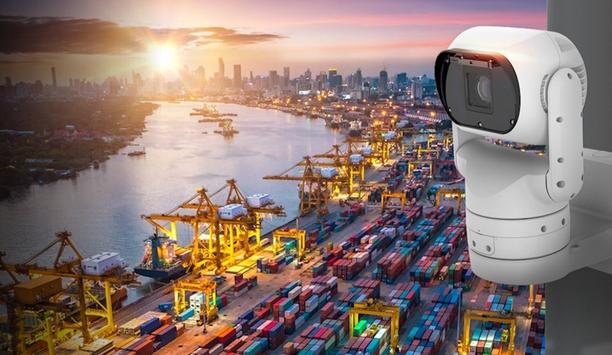
Hanwha Vision, a pioneer in video surveillance solutions, has announced the launch of three ruggedized PTZ cameras, purpose-built to deliver seamless monitoring in challenging environments. Designed to withstand extreme weather conditions, these cameras combine durability with AI-powered intelligence - via Hanwha Vison’s AI-native chipset Wisenet 9 - to provide reliable and intelligent surveillance for critical infrastructure, transportation, ports and urban environments. Engineered to endure The cameras, model TNP-A6550RW, TNP-A7430RW and TNP-A9430RW, are engineered for high performance. With an operating temperature range of -50°C to +60°C, and proven resilience in Category 5 hurricane-level winds (up to 257km/h), they ensure continuous monitoring in snow, heavy rain, high heat, or severe storms. Anti-icing technology, including a window defroster and pan heater, guarantees a clear field of view and full PTZ mobility in freezing conditions. Meanwhile, advanced optical image stabilization (OIS) and digital image stabilization (DIS) deliver clarity under high winds or strong vibrations, ensuring video remains steady even in the harshest conditions. Certified with IP68 dust and water resistance, and IK10 impact protection, as well as meeting MIL-STD-810H military standards, the camera delivers mission-critical reliability in any scenario. Whether exposed to saltwater spray at busy ports or enduring dust and sand in industrial zones, these T series cameras stand as a dependable solution. Powerful imaging capabilities Equipped with a powerful 55x optical zoom (2MP) or 43x zoom (4/8MP models) and an IR range of up to 500m, the cameras capture fine details across expansive areas. A wide tilt range and versatile mounting options ensure maximum deployment flexibility for diverse environments. Powered by Hanwha Vision’s Wisenet 9 System on Chip, the cameras achieve significantly improved low-light and Wide Dynamic Range performance, delivering clear and detailed images even in the most challenging lighting conditions. Intelligent AI-powered monitoring The cameras utilize advanced AI features to empower operators. The object classification engine identifies people (with clothing attributes for top and bottom colours), faces, vehicles, and license plates, dramatically improving forensic search speed and accuracy. Additionally, Dynamic Privacy Masking ensures compliance in sensitive zones, while seamless auto-tracking keeps focus on the target object, even when larger movements or surrounding crowds are present. This combination of AI analytics and automation enhances situational awareness while reducing operator workload. Trustworthy cybersecurity, seamless integrations Robust cybersecurity is built into the cameras, with certifications including FIPS 140-3 Level 3 and ETSI EN 303 645, for proven cyber resilience. WiseStream compression technology reduces bandwidth consumption without compromising image quality, optimizing efficiency for large-scale deployments. The camera also integrates seamlessly with leading video management software, including Milestone, Genetec (with Hanwha Vision’s plug-in), Wisenet SSM and Wisenet WAVE, ensuring smooth adoption into existing infrastructures. With its unmatched durability, superior imaging performance, advanced AI capabilities, and robust cybersecurity, this series sets a new benchmark for mission-critical surveillance in the most challenging conditions.
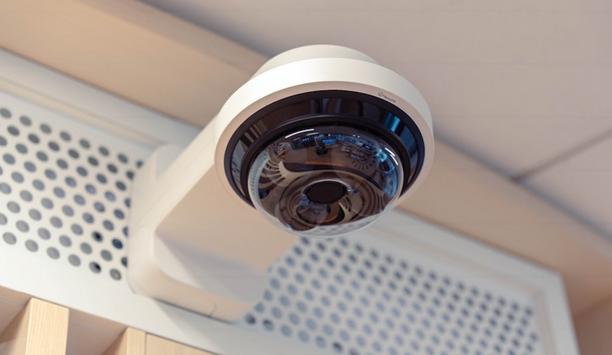
Hanwha Vision, the global vision solution provider, has opened its cutting-edge Experience Centre in Paris, reinforcing its commitment to the French market and accelerating its expansion in this key market. The Paris Experience Centre provides a dedicated space for customers and partners to engage directly with Hanwha Vision’s next-generation AI surveillance technologies. Visitors can experience firsthand how the company’s latest solutions – including AI-powered cameras and intelligent video analytics – deliver actionable insights and improve operational efficiency. Growing demand for advanced video surveillance The opening of the center reflects the growing demand for advanced video surveillance and analytics in France, across sectors including city surveillance, retail and transportation. By offering an immersive environment to explore these technologies, Hanwha Vision aims to deepen collaboration with French customers and demonstrate the real-world value of its AI-driven solutions. Jamel Djebari, Vice President for France at Hanwha Vision Europe, said: “The new Experience Centre demonstrates our strong commitment to the French market.” “It gives us the opportunity to engage even more closely with our customers and partners, helping them understand how Hanwha Vision’s AI solutions can address today’s security challenges while also unlocking wider business intelligence. We are proud to bring this to Paris and look forward to welcoming our community.” Key growth market Jeff (Chae Won) Lee, Managing Director, Hanwha Vision Europe, said: “France is a key growth market for Hanwha Vision in Europe, and the opening of our Paris Experience Centre marks an important milestone in our regional strategy. It provides a hub where customers can not only see our latest AI solutions in action but also explore how these innovations can support their specific security and business needs.” With this investment, Hanwha Vision continues its mission to deliver innovative, reliable, and trusted vision solutions across Europe, positioning itself as a long-term partner for organizations embracing AI-powered security.
Insights & Opinions from thought leaders at Hanwha Vision Europe

Environmental concerns and ‘green’ initiatives have been gaining steam recently with increasing attention to issues, such as climate change and the drive to ‘net zero’ emissions. Sustainability has not historically been a big concern in the physical security market, but the times are changing. We asked this week’s Expert Panel Roundtable: How can the security industry be more environmentally friendly and contribute to sustainability?

Here’s a news flash: 2022 will be a pivotal year for the security industry. As we enter the new year, continuing change is a safe prediction for any fast-moving, technology-driven marketplace. Recent history confirms the ability of the security industry to shift and adapt to changing conditions and to provide an ever-expanding menu of technology solutions to make the world a safer place. Given that the new year will bring change, what will that change encompass? More to the point, what should it encompass? We asked this week’s Expert Panel Roundtable: What is the biggest change you would like to see within the security industry in 2022?
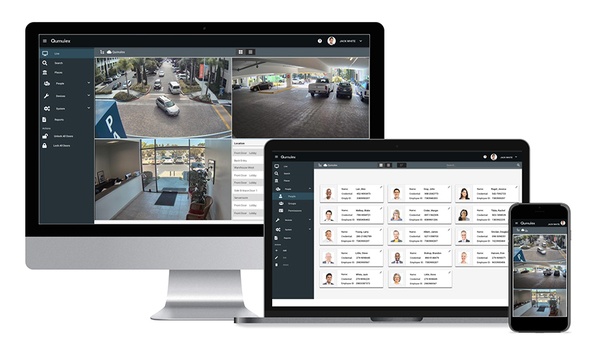
Qumulex is a new startup with a mission to provide physical security integrators a transition path to embrace the technology of the cloud and a subscription-based business model. Qumulex’s products seek to provide capabilities to embrace the cloud without an integrator having to turn their back completely on the ‘transactional revenue’ of installing new systems. As the transition happens, Qumulex offers a product line that supports any mix of systems from on-premises to the cloud. The flexible deployment model – enabling a cloud installation, an on-premise installation or any combination – is one of the ways Qumulex seeks to differentiate itself in the market. Installing fully on-Premise system The Qumulex cloud-based platform uses a gateway device located on-premises to which local cameras are connected The system is designed so that an integrator can install a fully on-premise system and then later ‘flip a switch’ and transition to a cloud model, says Tom Buckley, VP Sales and Marketing. The Qumulex initial 1.0 system launch is currently entering its final beta test. Full commercial availability is expected in the first quarter of 2020, which the company will highlight in a bigger 20x20 booth at ISC West next year. The Qumulex cloud-based platform uses a gateway device located on-premises to which local cameras are connected. Ensuring cybersecurity, the gateway provides a ‘firewall’ of sorts to avoid any cybersecurity threat from entering an enterprise through a vulnerable IP camera. The system is designed to be ‘cloud-agnostic’ and to work with any public or private cloud, using Docker software and ‘containers,’ a standard unit of software that packages code and all its dependencies so an application runs quickly and reliably from one computing environment to another. At launch, the Qumulex system will use the Google cloud. Greater situational awareness The open platform approach will enable users to assemble best-of-breed solutions Another point of differentiation for the new platform is a unified access control and video surveillance environment – both are part of the same program. Access control can drive video events and vice versa for greater situational awareness. A unified system avoids having to integrate separate systems. A big emphasis for Qumulex is ease of use. They have designed the user interface to be as simple and intuitive as possible, using consumer-oriented systems such as Nest and the Ring Doorbell as a model of simplicity. Finally, the open platform approach will enable users to assemble best-of-breed solutions. Keeping it simple, the system offers native integration with only the major camera manufacturers that represent most of the market: Axis, Hanwha, Arecont, Panasonic, Vivotek and Sony. Longer-Term storage Other cameras can be included using the ONVIF interface. On the access control side, the system will initially be compatible with Axis door controllers, Allegion wireless door locks and ASSA ABLOY Aperio wireless door locks. Future versions of the software will seek to integrate HID Edge and Vertx and eventually Mercury panels. The gateway device may incorporate only a solid-state drive (SSD) for buffering Qumulex is taking a ‘mobile-first’ approach. The software is designed as a ‘progressive web app,’ which means is it is adaptable to – and fully functioning in – any smart phone, mobile device, laptop, or on a desktop computer with multiple monitors. The gateway device may incorporate only a solid-state drive (SSD) for buffering, or as many hard drives as the customer wants for storage. Short-term storage is available in the cloud, but local hard drives may be used for longer-term storage which can get expensive given the monthly fees of cloud storage. Using third-Party server To manage the variety of scenarios, Qumulex will offer a line of gateways and recorders, or a customer can use a third-party server along with Qumulex, which is an open system. Qumulex will use a manufacturer’s representative sales model and has already signed up 11 rep firms covering the United States (the initial target of the launch). The company has been spreading the word among integrators, too, first at the ISC West show last spring, when 98 integrators saw demonstrations of the system at a suite in the Palazzo. Another 48 integrators saw the system at ESX in Indianapolis in June. At the recent GSX show in Chicago, Qumulex had a booth on the show floor, where they scanned 450 badges that yielded 176 unique integrators. Entering the physical security market Qumulex just closed a second round of funding, which does not include any ‘institutional’ money Buckley estimates there are around 10,000 total security integrators in the United States that sell products similar to theirs at their price point. They are working to build their database to reach out to those integrators. (Exacq had more than 4,500 dealer/integrators before it was sold to Tyco/Johnson Controls.) Qumulex is the third company to enter the physical security market by the same team that launched two other successful startups in the last 20 years: Exacq Technologies (sold to Tyco in 2013) and Integral Technologies (sold to Andover Controls in 2000). Both previous companies were built around a need to help the integrator community transition to newer technologies. Qumulex just closed a second round of funding, which does not include any ‘institutional’ money. The first round of investment involved only the founders, and the second round added some ‘angel’ investors to the mix. The funding allows more flexibility and control over the company’s timeline and the evolution of the product’s feature set, free of outside mandates, says Buckley.