

Featured white papers

The Key To Unlocking K12 School Safety Grants
Download
Honeywell GARD USB Threat Report 2024
Download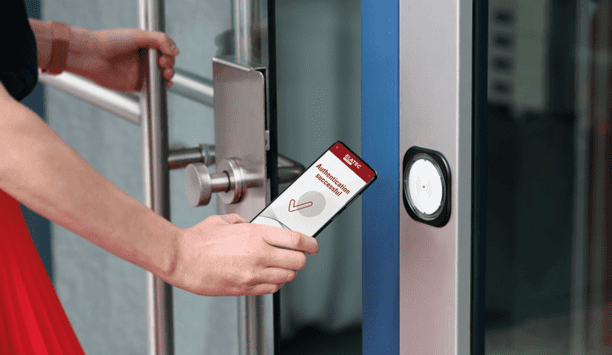
Physical Access Control
Download
The 2024 State Of Physical Access Trend Report
Download
The Security Challenges Of Data Centers
Download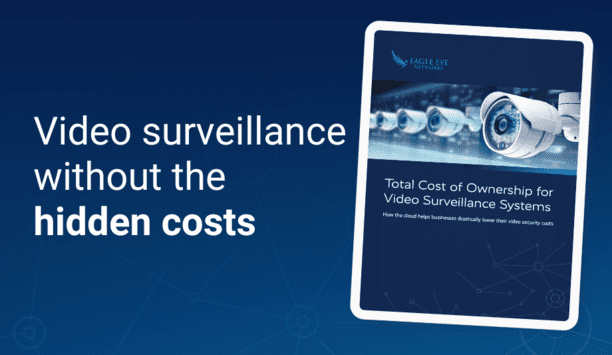
Total Cost of Ownership for Video Surveillance
Download
Access Control System Planning Phase 1
Download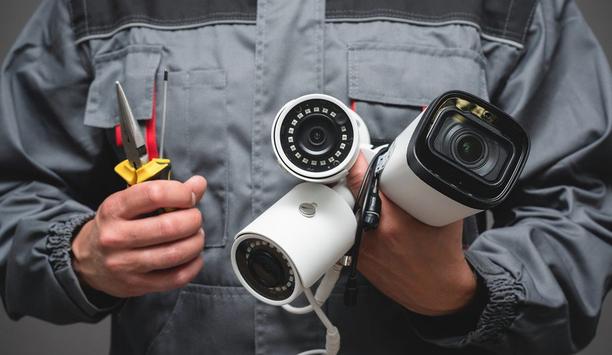
How To Lower Labor Costs When Installing Video Surveillance
Download
Are You Ready For An On-Site Emergency?
Download
Understanding Key Control Systems And Best Practices
Download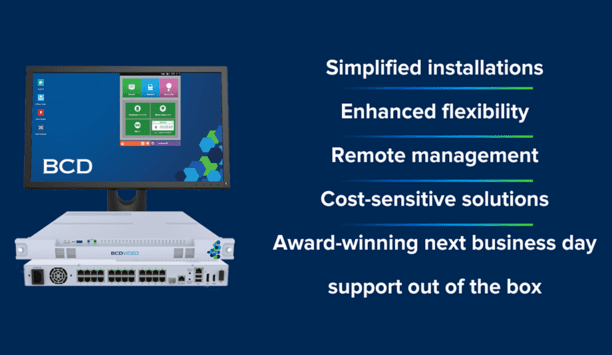
Understanding All-In-One Solutions
Download
Securing Data Centers: Varied Technologies And Exacting Demands
Download
VSS - Top 4 Questions To Get You Started
Download
Top 7 Trends To Watch In The Physical Security Industry
Download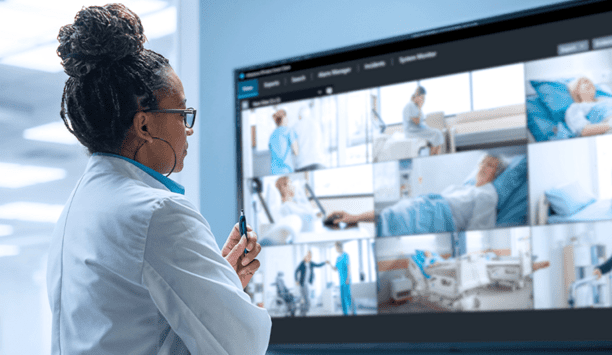
Essential Data Security Strategies For Healthcare
Download
Search for products
Search from our vast range of products (46,305)


Featured products




Editor’s picks

Critical national infrastructure encompasses sectors such as energy, utilities, healthcare, and data centers – environments that underpin economic stability and public safety. With so much at st...

There was a time when physical security and cybersecurity occupied two very different worlds. One was concerned with the nuts and bolts of locks, doors and perimeter protection. The other focused on networks, software and digital threats. Today’s modern access control systems – used in everything from offices and hotels to hospitals and data centres – combine the two, fusing mechanical engineering and cloud platforms. That means that a door is no longer simply a physical barri...

Biometrics today provide better security and frictionless user experiences. Biometric identifiers like fingerprints, facial recognition, and iris scans are unique and difficult to forge. They eliminate the vulnerabilities of traditional authentication and streamline secure access control. Identity verification reliably protects sensitive digital information and physical entry. We asked our Expert Panel Roundtable: How is the role of biometrics evolving in physical access control?

The eagerness to adopt AI in physical security is increasing as teams want to implement technology solutions for faster, smarter operations. At the same time, the conversations surrounding AI have changed. The focus now includes not only efficiency gains but also concerns about accountability and trust. According to the Genetec 2026 State of Physical Security report, AI ranked alongside access control and video surveillance as a key priority. However, approximately 40% of the over 7,000 physica...

Editor
Round table discussions

Passwords originated in ancient times, used by Roman military forces around the first century BC. Since then, passwords have evolved from physical words to the computer access control tools used today. Passwords are easy to implement, widely supported, and fam...
Critical national infrastructure encompasses sectors such as energy, utilities, healthcare, and data centers – environments that underpin economic stability and public safety. With so much at stake, the importance of effective security systems is that mu...
Biometrics today provide better security and frictionless user experiences. Biometric identifiers like fingerprints, facial recognition, and iris scans are unique and difficult to forge. They eliminate the vulnerabilities of traditional authentication and stre...
Latest videos
-
 Dahua Traffic Signal Controller Highlight
 -
 Dahua DeepHub ST430 Highlight
 -
 CLIQ Connect
 -
 DNAKE Access Control Terminals: Minimalist Design, Maximum Security!
 -
 Unlock the Future with Abloy Pulse: Keyless, Energy-Efficient Security Systems
 -
 Dahua MultiVision Online Event - Look Wider, Protect Deeper
 -
 Dahua Technology Company Introduction — Integrated Intelligence, Infinite Possibilities.
 -
 Unboxing & Highlight | Dahua PT1 Turret Camera
 -
 Dahua MPT230 Body Camera Highlight
Case studies

In a move to modernize campus operations and create a smoother experience for students and staff, Peru’s National Agrarian University has deployed a comprehensive Hikvision smart campus solution. From streamlined access to safer transportation, the university is building a safer, connected and efficient campus environment. Universidad Nacional Agraria La Molina (National Agrarian University) is one of Peru's most respected academic institutions. Its 102-hectare campus operates more like a small city than a traditional university, serving eight faculties, around 8,000 students, and about 600 teachers every day. Large campus area As campus activity continued to grow, the university wanted a more modern and efficient way to manage daily operations. Previously, visitor and vehicle access relied heavily on manual checks and handwritten records. The university also wanted better visibility over campus bus operations and more effective support for security teams patrolling the large campus area. Their goals included: Streamlining pedestrian and vehicle access Equipping patrol teams with mobile tools to enable them to respond to incidents faster Enhancing safety and visibility across campus bus operations Centralizing management through a single unified platform Smart campus solution To achieve these, the university worked with system integrator Consorcio Valtar Security y Serinfortel to deploy a unified Hikvision smart campus solution. To improve pedestrian access, the university installed 18 Hikvision Pro Swing Barriers (DS-K3B530X) and 28 Face Recognition Terminals (DS-K5671-ZV) at the main and side entrances. The solution helps students and staff move through gates quickly while improving entry management. The facial recognition terminals support recognition speeds of less than 0.2 seconds per user and accuracy rates above 99%. Anti-tailgating functions, which prevent people slipping in behind others, helps ensure only authorized individuals can enter. LED indicators, meanwhile, provide visual indicators guide people through the turnstiles in order to avoid bottlenecks. Reducing manual paperwork To further streamline visitor handling, the university deployed a Visitor Terminal (DS-K5032-D) together with an Enrollment Station (DS-K1F600U-D6E-F) at the main entrance. The dual-screen visitor terminal supports paperless registration, helping security staff process guests more efficiently while reducing manual paperwork. At the same time, the enrollment station simplifies face enrollment and user management through an easy-to-use touch-screen interface. For vehicle access, Hikvision deployed 6 ANPR Cameras (DS-TCG406-E(S)) together with 6 Barrier Gates (DS-TMG520-H/B) at two campus entrances. The system automatically recognises license plates and manages vehicle access in real time, helping reduce waiting times and improve traffic flow. Staff vehicles can be pre-registered through the university’s app, allowing smoother entry during peak hours. Adjustable barrier speeds and multiple anti-hitting protection mechanisms also help improve operational safety. To further improve the driver experience, LED Screens (DS-TVL224-4-5Y) display welcome messages and vehicle information in real time. Maintaining daily operations Because of the campus’s large size, motorcycle patrol teams play an important role in maintaining daily operations and responding quickly across different areas. To support these teams, the university has deployed 10 Hikvision Ultra Series Body Cameras (DS-MH2311) together with 2 Dock Stations (DS-MDS001). Several features make this solution particularly suitable for mobile patrol work: Clear 2 MP video recording with a wide 129° horizontal field of view Up to 8 hours of recording with a removable 3,300 mAh battery Wireless connectivity for improved communication Real-time positioning support through GPS Centralized charging, storage, and evidence upload through dock stations Professional campus operations The cameras are mainly used during routine motorcycle patrols and when responding to incidents on campus. Recorded footage helps clearly document security procedures and provides reliable records of how situations were handled, supporting transparent and professional campus operations. The university has also upgraded safety across its fleet of 11 campus buses with Hikvision onboard solutions. Each bus is equipped with: Mobile Dome Cameras (DS-2XM6726G1-IM/ND) and Mobile Network Cameras (DS-2XM6522G1-ID): These provide real-time HD video coverage inside and outside the buses, helping operators monitor passenger boarding, alighting, and road conditions clearly. DSM Camera (AE-VC1B1I-ISF(RJ45)): This improves driving safety by detecting critical safety indicators such as fatigue, distractions, and smoking. When potential risks are identified, alerts are immediately issued to the driver, helping encourage safer driving practices during daily routes. Touch Monitor (AE-MW1203): Drivers can view live camera feeds through the monitor. The display automatically switches to relevant views when doors open or when reversing, helping drivers monitor passenger movement and blind spots more effectively. Alarm Button (DS-1530HMI(AE)(O-NEU)): It allows drivers to immediately notify the control center for rapid assistance in emergency situations. Mobile NVR (AE-MN5043(1T/SSD)(RJ45)(O-STD)): This records and stores video while also supporting GPS positioning, geofencing, and route monitoring through Google Maps integration. Campus bus management Every solution, from access control and patrol operations to campus bus management, is centrally managed through HikCentral Professional. From this single platform, the university can: Monitor access events in real time Manage user permissions and visitor records Track campus buses through GIS-based maps Receive centralized alarms and event notifications Coordinate faster responses across campus Daily campus operations According to the university, the solution has significantly improved operational visibility and coordination across the campus. “With Hikvision’s smart campus solution, we now have a much more efficient and connected way to manage daily campus operations,” says Joseph Jimy Ordóñez Blanco, General Coordinator of the University’s Security Unit. “From access management to transportation safety, the platform gives our teams better visibility, faster response capabilities, and greater confidence in maintaining a safe environment for students and staff.”
Read more


Featured security companies








Company in profile
Increase your online visibility and get found by relevant security professionals.